Coach development

The AI told me something I did not want to hear.
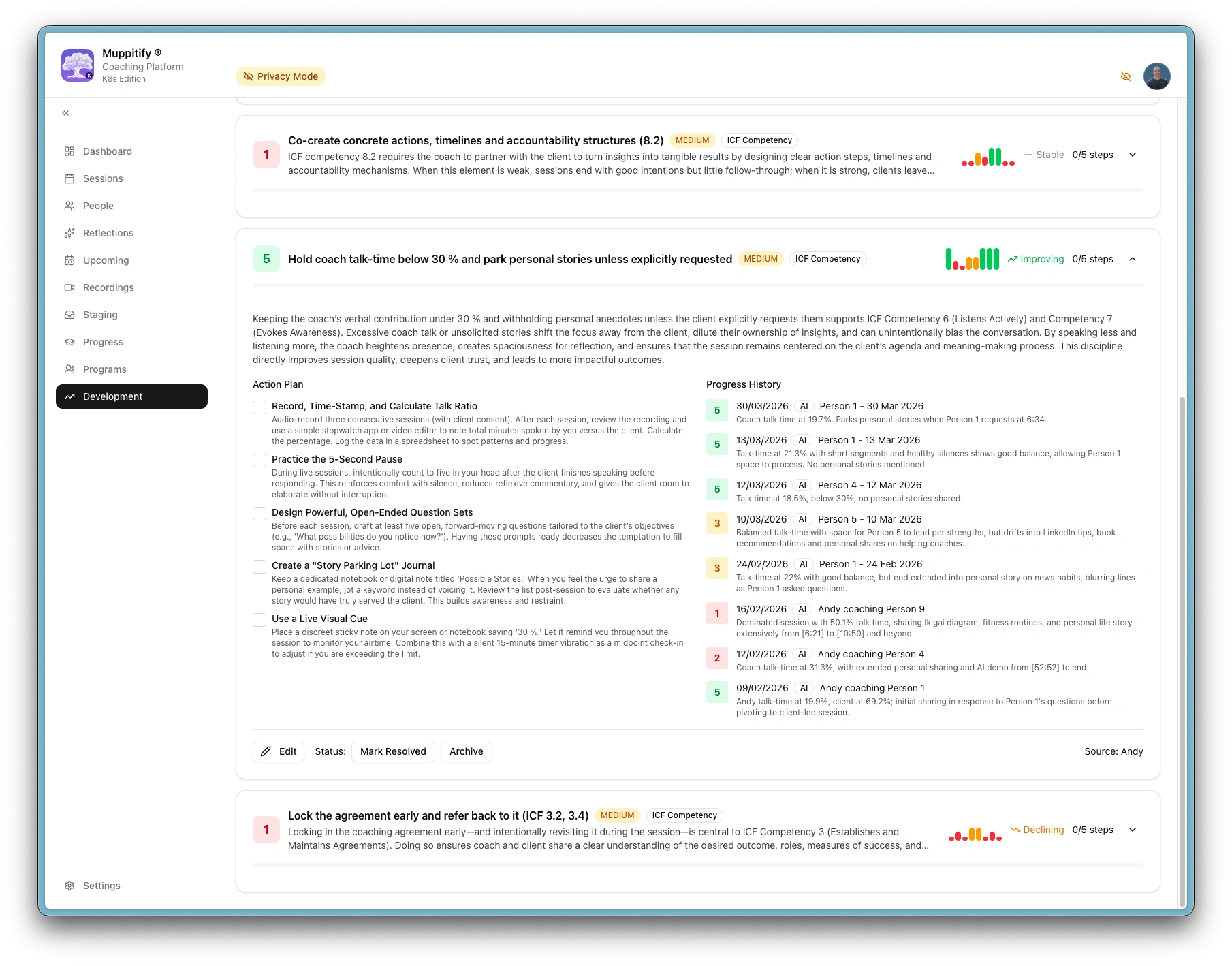
Across my coaching sessions, I was talking 35% of the time. Too often I was filling space with my own stories instead of holding it for the client. I was also starting sessions without clear agreements. I knew I had room to grow, but I did not realise how consistent the pattern was until I saw it laid out across every recorded session.
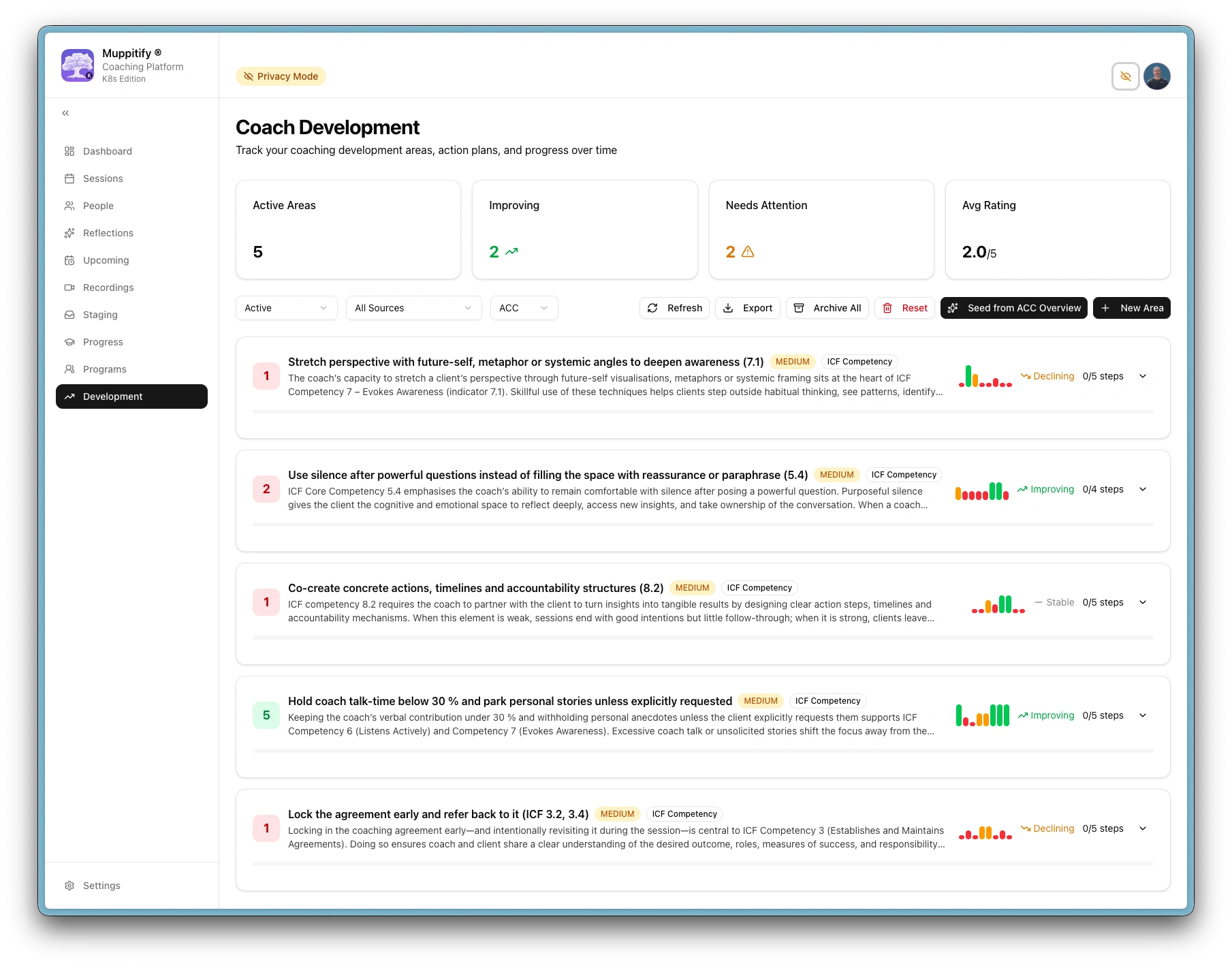
I had built a coaching platform for my own development. Its cross-session synthesis analysed my transcripts against ICF competency markers and surfaced five development areas, each scored as improving, stable, or declining.
I chose one area to work on first: keep my talk time below 30%, and park personal stories unless the client explicitly asks.
I went looking for material that addressed what I was getting wrong and landed on two books. Eugene Gendlin's Focusing changed how I understand listening. Marcia Reynolds' Coach the Person, Not the Problem changed how I hold space without rushing in to fill it.
Over the following weeks I practised deliberately. Counting to five after questions. Letting silence do some of the work. Resisting the pull to share my own experience when the client's experience was already there.
Recently, a client told me, unprompted, that my questions felt more on point and my listening had improved. That feedback landed differently because I could also see the change in the data. My talk time had dropped from 35% to under 25%, and that development area was moving in the right direction. The numbers matched what the client felt.
The AI did not replace my coaches or my mentor. It helped me see a pattern I could not see from inside individual sessions. I still had to do the work: the reading, the practice, the reflection. But without that cross-session view, I would not have known where to focus.
The AI showed me where to look. The work was still mine to do.
Read more: Muppitify Coaching Platform